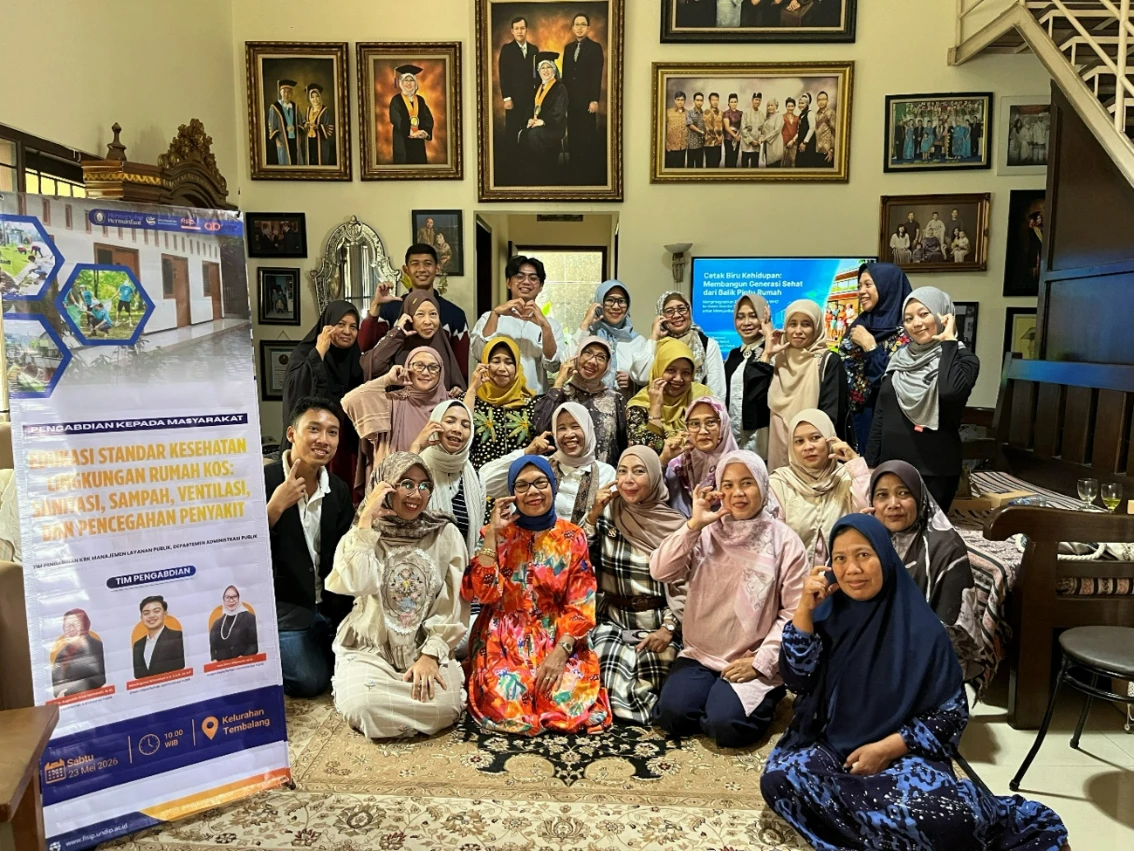
Semarang – Saturday, May 23, 2026. The Department of Public Administration, Faculty of Social and Political Sciences (FISIP), Diponegoro University, once again demonstrated its commitment to implementing the Tri Dharma of Higher Education through a Community Service Program entitled “Education on Environmental Health Standards for Boarding Houses: Sanitation, Waste, Ventilation, and Disease Prevention.” The activity was held in Tembalang Subdistrict, Semarang City.
The program, funded through the 2026 Work Plan and Annual Budget of FISIP Diponegoro University, was led by Dr. Dra. Augustin Rina Herawati, M.Si., with team members Dra. Nina Widowati, M.Si. and Nawangsasi Wincahyo Artiko Aji, S.A.P., M.A.P. The activity targeted boarding house owners and managers, student tenants, as well as local communities around the campus area, who have long been an important part of the educational ecosystem in Tembalang.
As the largest educational area in Semarang City, Tembalang has experienced rapid growth in student boarding houses in line with the increasing number of students coming from various regions. Behind this growth, however, several environmental health challenges require serious attention. Suboptimal sanitation conditions, poorly managed waste, inadequate ventilation, and low awareness of environment-based disease prevention are among the issues frequently found in a number of boarding houses. If not addressed properly, these conditions may reduce the quality of life of residents, increase the risk of disease, and disturb the comfort of the surrounding environment.
The Head of the Community Service Team, Dr. Augustin Rina Herawati, explained that boarding houses do not merely function as temporary residences for students, but are also part of residential environments that have a direct impact on public health.
“Environmental health in boarding houses is often considered a simple issue, whereas it has a significant influence on the quality of life of residents and the surrounding community. Through this activity, we aim to build awareness that sanitation, waste management, ventilation, and clean and healthy living behavior are essential foundations for creating a healthy and sustainable residential environment,” she stated.
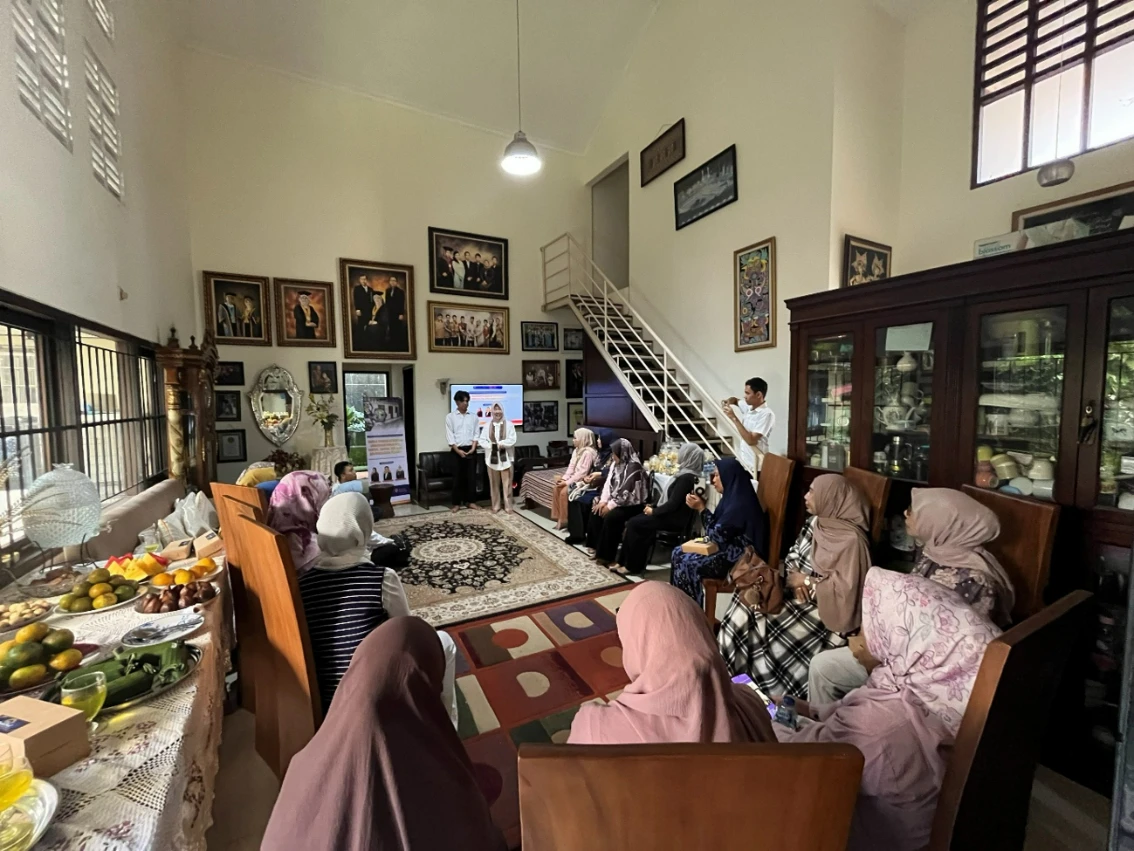
Unlike one-way socialization programs, this community service activity adopted an educational and participatory approach involving all stakeholders, including boarding house owners, tenants, neighborhood officials, and local residents. The program was carried out through several stages, namely capacity building through training and workshops, mapping of environmental health problems in boarding houses, focus group discussions, and direct mentoring in the implementation of environmental health standards.
The materials delivered covered sanitation and shared facility management, household waste management, improvement of ventilation and air circulation quality, as well as environment-based disease prevention through the implementation of Clean and Healthy Living Behavior and disease vector control. In addition to improving participants’ knowledge, the program also encouraged behavioral change and the formation of a healthy living culture within boarding house environments. This activity also served as a platform to strengthen collaboration between the university and the community in addressing increasingly complex urban issues.
The community service team collaborated with the subdistrict government, neighborhood officials, boarding house owners, and student representatives to build a shared commitment to maintaining the quality of residential environments in the Tembalang area. This program is in line with several sustainable development agendas, particularly Good Health and Well-being (SDG 3), Sustainable Cities and Communities (SDG 11), and Responsible Consumption and Production (SDG 12).
Through this activity, FISIP Diponegoro University hopes to contribute to the creation of healthier, safer, and more comfortable student housing environments, while strengthening a culture of clean and healthy living in the educational area.
This activity also serves as concrete evidence of the role of higher education institutions as agents of social change. Universities are not only responsible for producing knowledge through education and research, but also for providing practical solutions to various community problems through impactful community engagement. With increasing awareness and capacity among the community in managing environmental health in boarding houses, Tembalang is expected to develop into a healthy, productive, and sustainable educational environment for all its residents.