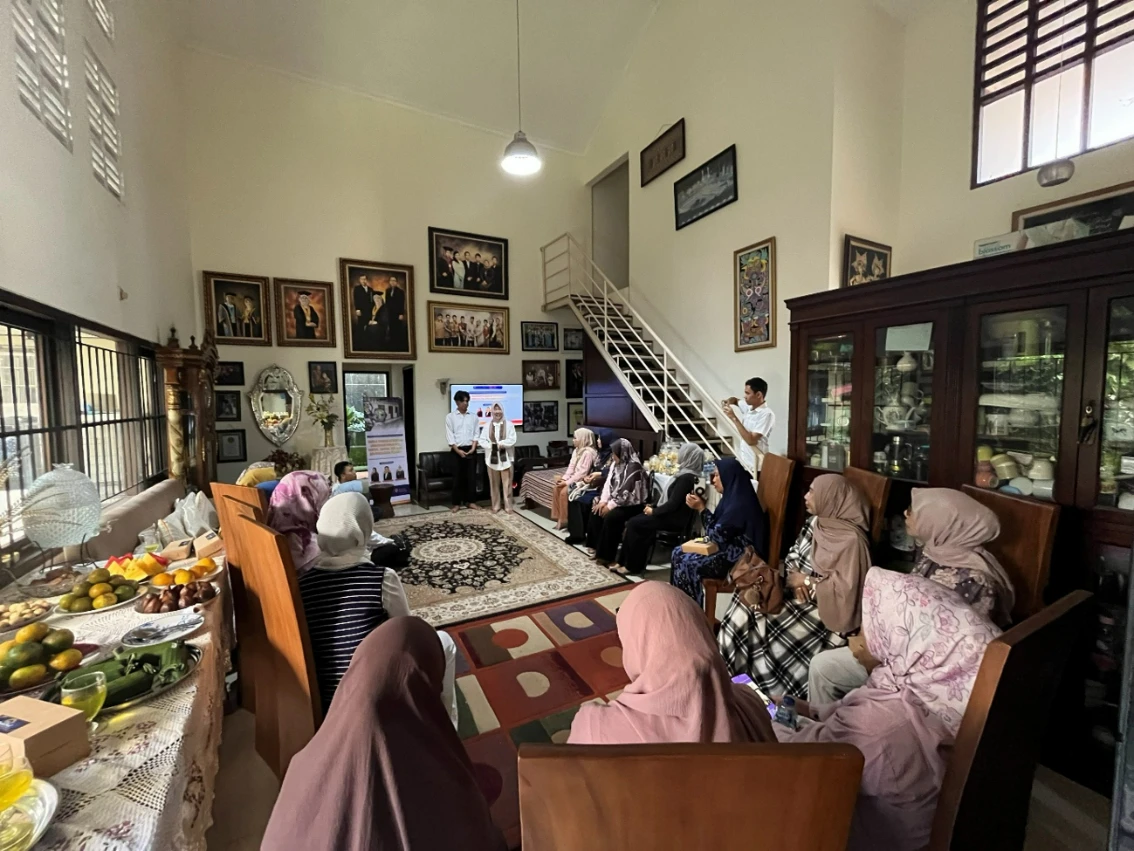
Semarang – Saturday, May 23, 2026. The Faculty of Social and Political Sciences (FISIP), Diponegoro University, once again carried out a Community Service Program as part of its commitment to strengthening environmental governance in educational areas. The program, entitled “Community Development in the Tembalang Campus Area on Regulations and Ethics of Boarding House Management,” was held in Tembalang Subdistrict, Semarang City, involving boarding house owners and managers, student tenants, local residents, and neighborhood officials.
The community service program was led by Prof. Dr. Dra. Endang Larasati Setianingsih, M.S., with team members Dr. Ida Hayu Dwimawanti, M.M. and Mohammad Nurul Huda, S.AP., MPA. The activity was funded through the 2026 Work Plan and Annual Budget of FISIP Diponegoro University as part of the implementation of the Tri Dharma of Higher Education in responding to various social issues emerging in campus areas.
As one of the largest educational areas in Indonesia, Tembalang has experienced rapid development alongside the growing number of students requiring temporary accommodation. The massive growth of boarding houses has contributed to the local economy. At the same time, however, it has also created new challenges related to public order, security, comfort, and social harmony between boarding house tenants and surrounding communities.
In practice, several issues remain, including limited understanding of boarding house management regulations, suboptimal implementation of house rules, weak complaint-handling mechanisms, and insufficient awareness among some tenants regarding social norms and community life. These conditions may lead to social conflict, disturbances to neighborhood order, and a decline in the quality of life of communities living around the campus area.
The Head of the Community Service Team, Prof. Endang Larasati Setianingsih, explained that boarding house management is not merely related to the provision of accommodation, but is also part of public governance that requires regulatory compliance and ethical commitment from all parties involved.
“Boarding houses are part of the social ecosystem of the campus area. Therefore, their presence must be managed professionally, ethically, and in harmony with the interests of the surrounding community. Through this activity, we seek to strengthen understanding of regulations while building a more orderly and responsible culture of boarding house management,” she stated.
This community service program was designed to improve public understanding of various provisions governing boarding house management, including the rights and obligations of boarding house owners, environmental order, administrative governance, as well as supervision and guidance mechanisms applicable in Semarang City. In addition, participants gained insight into the importance of management ethics and residential ethics as the foundation for creating a safe and harmonious living environment.
The training materials covered tenant service management, communication and complaint handling, neighborhood norms, security management, noise control, parking arrangements, waste management, and strategies for preventing social conflicts that often arise in student boarding house environments. All materials were delivered through educational and participatory approaches, including training sessions, workshops, focus group discussions, and simulations of case resolution commonly encountered in student boarding areas.
Through mentoring activities, participants not only gained new knowledge but were also facilitated in formulating a shared agreement on ethical boarding house governance. The agreement included commitments from boarding house managers to provide good services, ensure the safety and comfort of tenants, and respond to complaints professionally. Meanwhile, student tenants were encouraged to maintain public order, respect the social norms of the surrounding community, and participate in preserving environmental cleanliness and security.
This activity also demonstrated the concrete contribution of the discipline of Public Administration in addressing community problems through a collaborative governance approach. Through synergy among the university, local government, boarding house owners, tenants, and surrounding communities, the program is expected to create a model of boarding house management that is more orderly, safe, transparent, and sustainable.
Furthermore, this program forms part of Diponegoro University’s efforts to support the development of an educational area that is not only academically excellent but also capable of creating a social environment conducive to learning, community life, and sustainable urban development.
Through this community service program, FISIP Diponegoro University reaffirmed its role as a higher education institution that is present in society to provide knowledge-based solutions, strengthen public governance, and encourage the creation of harmonious social life within and around the campus environment.