Semarang, May 22 – HMPS Public Administration, through the Department of Advocacy and Student Welfare, successfully held the Public Priority Vol. 1 2026 activity as a means to evaluate academic aspects and channel the aspirations of students from the Public Administration Study Program, FISIP, Universitas Diponegoro. This event served as a space for joint reflection between students and study program administrators to foster a more open, communicative, and responsive academic environment that addresses student needs. Based on a study conducted on 159 active students, the event presented various evaluations related to the learning process, academic services, and communication dynamics within the lecture environment.
The activity began with a warm and enthusiastic opening. The open and supportive forum atmosphere served as a starting point for positive academic discussions between students and study program administrators. Public Priority Vol. 1 was not only a platform for conveying criticism but also a medium for creating a constructive and collaborative evaluation culture aimed at improving the quality of education in the field of Public Administration.
The event continued with a speech from the Chairperson of Public Priority Vol. 1 2026, who explained that this activity was a manifestation of HMPS Public Administration’s commitment to maintaining academic standards and ensuring that student aspirations could be properly conveyed to the program administrators. In his speech, the Chairperson also highlighted the importance of healthy and reciprocal communication between students and lecturers to make the teaching and learning process more efficient and enjoyable for all members of the academic community.
The next remark was delivered by the Chairperson of HMPS Public Administration, who appreciated the students’ involvement in completing the evaluation and their courage in expressing opinions objectively and constructively. He stated that Public Priority is not merely an annual agenda but a tangible manifestation of student concern for the quality of learning and the academic future in the field of Public Administration.
The activity continued with a message from the Head of the Public Administration Study Program, who welcomed the implementation of Public Priority Vol. 1 2026 as a form of collaboration between students and study program administrators. In his message, he emphasized that input and evaluation from students are crucial and can be used as material for joint reflection to improve the quality of learning and academic services in the future.
Entering the main session, the Department of Advocacy and Student Welfare presented the results of the academic evaluation research collected from active Public Administration students. The presentation covered various assessment indicators, ranging from lecturers’ mastery of the material, teaching methods, academic communication, guidance services, to the classroom learning atmosphere. The evaluation results showed various appreciations for lecturers who were considered communicative and competent, but several notes were also found regarding material delivery, lecture schedule consistency, the effectiveness of teaching methods, and the thesis guidance system that still needs improvement.
In addition to the presentation of research results, the forum also held a session in which the study program administrators provided responses to the evaluation results that had been presented. During the session, the administrators expressed appreciation for the students’ openness in sharing feedback and emphasized their commitment to using the evaluation results as a tool for joint reflection. Several key focuses included strengthening academic communication, improving learning effectiveness, and enhancing coordination and mentorship systems for students.
After that, students were given the opportunity to express their aspirations directly through an open discussion session. Various aspirations were expressed, ranging from the desire for a more organized learning system, adjustment of lecture schedules to better align with the IRS (Study Plan Card), improvement of communication quality between lecturers and students, to improvements in the academic system such as IRS implementation and exam integrity. Students also hoped that the learning environment could become a safer, more supportive, and more inclusive place for all students.
In response to the aspirations raised by students, the study program administrators provided a number of responses and explanations regarding the steps to be taken in the future. The discussion took place openly and communicatively, with an emphasis on collaborative efforts to find solutions to various academic obstacles experienced by students. This forum became an important moment to strengthen mutual understanding between students and administrators in creating a higher-quality learning process.
The series of activities continued with a discussion of the results and the reaffirmation of the evaluation points that were of shared interest. The results of the discussion are expected to serve as a foundation for further action by both study program administrators and students in creating a more efficient, supportive, and sustainable academic ecosystem focused on improving the quality of education.
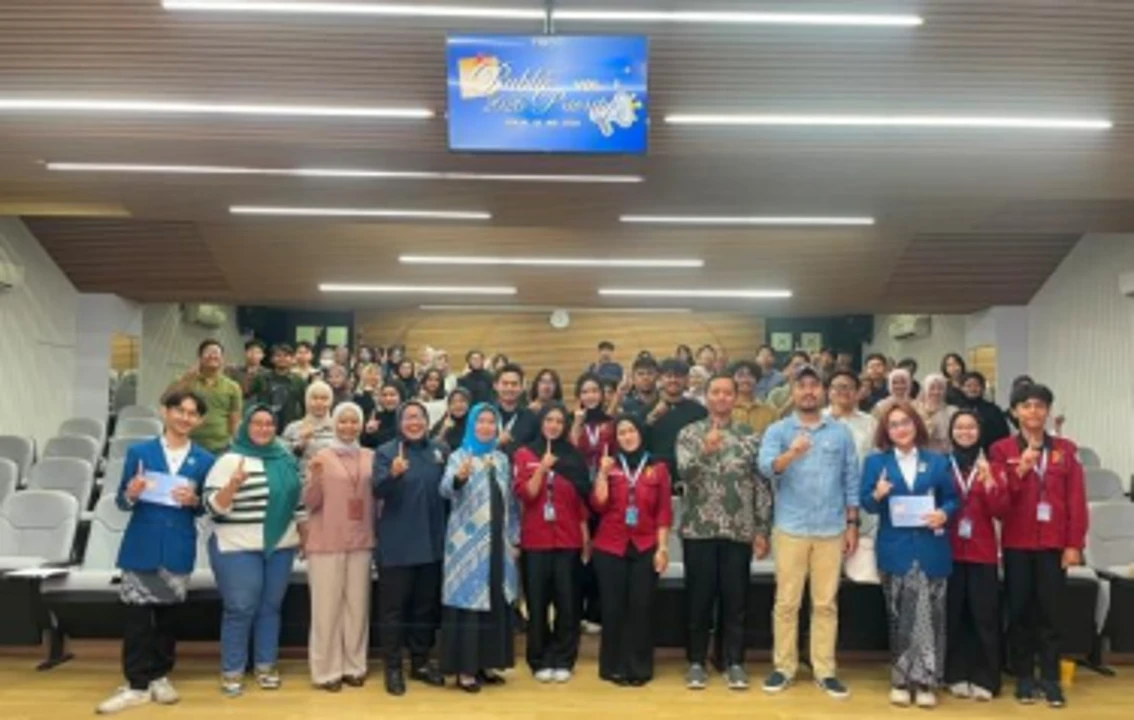
Public Priority Vol. 1 2026 was closed with the hope that this evaluation forum would not merely serve as a ceremonial agenda but could also function as an initial step in building an academic culture that is more open to feedback, reflective, and solution-oriented. The entire series of activities concluded with a joint documentation session as a symbol of collaboration and commitment from students, HMPS Public Administration, and study program administrators to realize a more excellent and responsive academic environment.